
When this Pilates studio became somewhere to belong, class demand rose 57%
Even with interiors that felt part spa, part luxury hotel, this reformer studio was struggling to distinguish itself in London’s increasingly crowded Pilates market. It had experienced, highly qualified instructors and an in-studio experience to die for, yet it could not clearly give prospects a reason as to why they should choose this studio over another.
Before I began working with it, the studio was largely a place people came to take a class and then left. Its Instagram content unintentionally reinforced the idea that this studio was not in demand, with both stories and feed posts giving the impression of mostly empty classes.
Commercially, this showed up in low average class occupancy, limited new membership sales and declining renewal activity.
Yet building a distinctive brand world—and bringing it to life through aligned experiences—as part of a 26-day membership campaign did more than help sell ten £180 memberships. It also coincided with increased demand for the studio’s regular classes among existing members and prospective clients alike.
Across its regular classes, booked utilisation rose from a historical average of 28.8% to 38.5% during the first four weeks of the campaign, before climbing further to 45.2% during the follow-up experience phase.
In other words, making the membership more desirable appeared to increase the perceived value of the studio as a whole.
In this Field Note, I unpick the commercial impact of building this Pilates studio’s brand world, bringing experiences aligned with that world into the studio, and consistently communicating them across its touchpoints with former clients, current members and prospects. I then explore how you can apply these learnings to your own Pilates studio.
As always, this is a field note from my personal experience working with one London reformer studio and is not a universal prescription for every reformer studio.
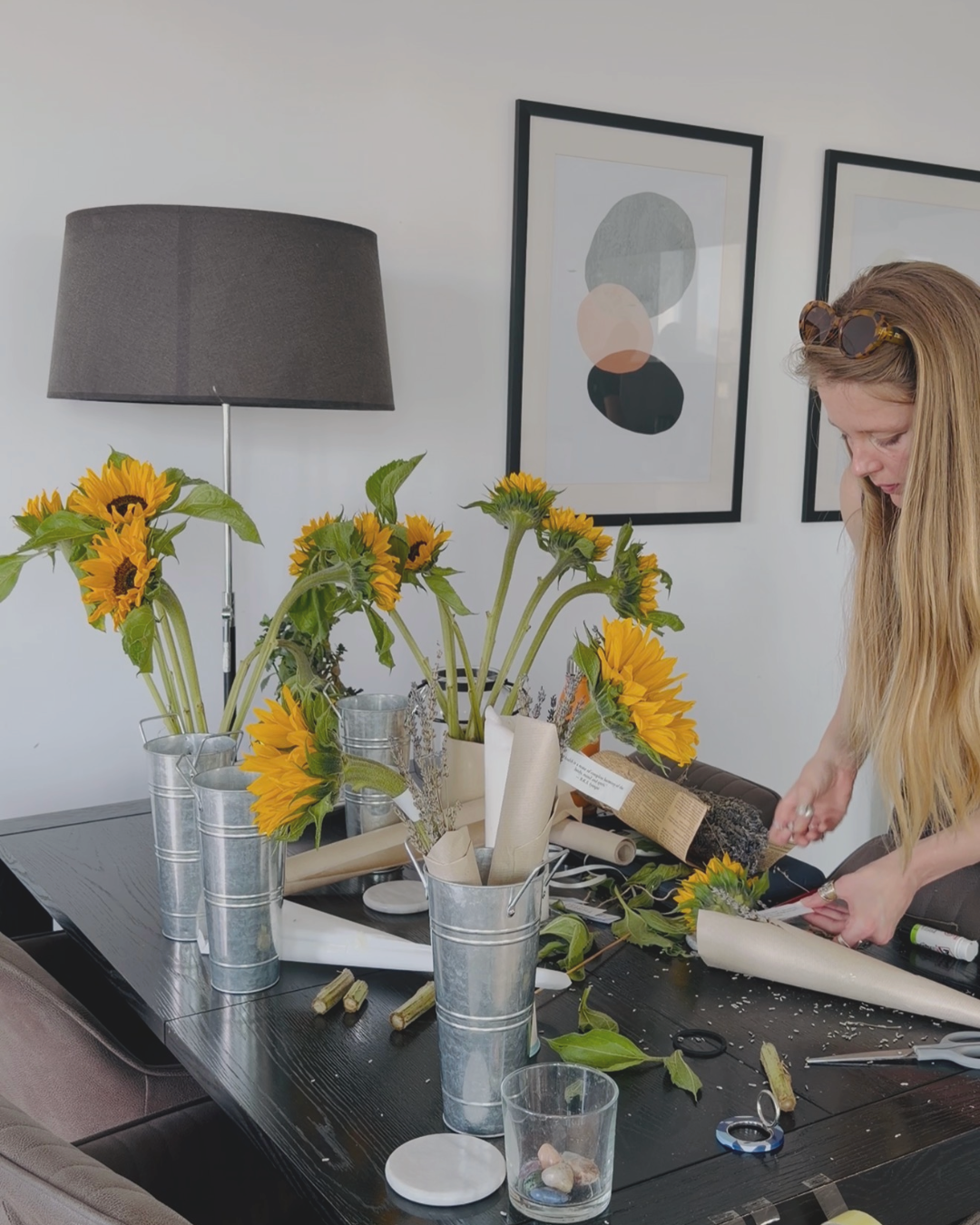
Author preparing flower arrangements for the Midsummer Renewal event at Pilates studio
Pattern
When I began working with this studio, I was determined to create a distinctive brand world and positioning with the specific aim of selling more of the target membership during the campaign. As part of this strategy, I transformed the membership into a more irresistible offer, complete with exclusive welcome gifts and in-studio experiences.
However, promoting this enhanced membership had a far broader commercial impact than I had anticipated. Because the offer and its additional features were unlike the memberships typically promoted by other London studios, they helped move this studio towards a niche-of-one position.
This translated not only into sales of the target membership, but also into increased average class occupancy, sales of other recurring memberships and greater renewal activity.
A mini-event initially put together primarily to capture promotional content—combined with a competition encouraging clients to share photographs from inside the studio on their Instagram Stories—also strengthened the studio’s distinctive positioning and generated far more value than I had anticipated.
The resulting content showed genuine moments of fullness, energy and participation. Rather than merely telling prospects that the studio was desirable, it gave them visible evidence that other people were actively choosing it.
This appeared to create an upward spiral of demand: as more people saw the studio looking full, popular and socially alive, it signalled quality and desirability. That encouraged more people to attend—or existing clients to return more frequently—which then created further visible demand for the studio to communicate
In retrospect, I realised that by positioning this studio as more than somewhere people simply came to take Pilates classes, I was aligning it with the changing role that standout studios across the global market are beginning to adopt.
This new role is developing against a backdrop of increasing social isolation across many Western cities. As more social interaction takes place through screens—and hybrid working reduces the everyday contact previously provided by the workplace—the desire for meaningful offline social spaces has grown.
Against this backdrop, the Pilates studios standing out in an increasingly crowded global market are moving beyond purely transactional relationships with their members. Instead, they are becoming sober, wellness-focused social spaces—places people visit not only to exercise, but also to connect, participate and feel that they belong.
By building this studio’s distinctive brand world and bringing it to life through aligned experiences, the studio began to become more of the destination busy Londoners were already looking for. In doing so, it widened its appeal beyond people simply searching for somewhere to take a Pilates class.
The classes remained the core product, but the brand world gave people a stronger reason to choose the studio, return to it and identify with it.
Practice
I did not simply create content designed to make this studio look in demand, nor was I chasing virality for its own sake. Instead, I created the experiences, offer and brand world that gave people a stronger reason to want the studio—and then used content to make that genuine demand visible and commercially valuable.
The sequence was more substantive than “post more content and attract more bookings.” A distinctive brand world and aligned experiences created desire for the studio. That desire became membership sales; those memberships generated recurring revenue and brought people into the studio more consistently. More recurring members helped create fuller classes, and those fuller classes produced credible social proof that could be captured and communicated—making the studio increasingly desirable to the next prospective client.
The most transferable lesson is therefore not simply to hold more events or post more crowded class videos. It is to create a brand world, offer and studio experience distinctive enough to make participation genuinely desirable—and then use content, email and other customer touchpoints to show people what they are currently missing.
In this studio’s case, content engagement was consistently stronger when posts showed a full, energetic studio than when they featured an individual instructor or a small group filming in an otherwise empty space. The former did more than demonstrate an exercise: it showed people choosing the studio, participating in its world and enjoying being part of it.
When content is used as proof of real demand rather than as a substitute for it, it can reinforce the studio’s perceived popularity and value. Prospects are no longer being asked to take the studio’s word for how desirable it is; they can see other people actively choosing it.
This does not require an enormous event budget. A studio can begin by documenting the energy of an existing class or intentionally creating a simple post-class social moment with drinks and conversation. The aim is not to manufacture a false impression of popularity, but to give clients a genuine reason to stay, connect and participate beyond the class itself—and then document that experience.
When these moments are positioned as recurring expressions of the studio’s wider brand world, rather than isolated promotional gimmicks, they can create curiosity around what else happens there. Smaller rituals build anticipation for larger experiences, while every experience gives current and prospective members another reason to join, return and talk about the studio.
Content then becomes the proof and distribution of the brand world—not the brand world itself.
Proof
The commercial data supports this pattern.
Across 1,303 regular classes before my work began, Threesix averaged 2.59 bookings per class, filling 28.8% of its available spaces.
During the four weeks following the first mini-event on 20 June—when the studio moved into an experience-led campaign combining a higher content cadence, fuller-studio social proof, offer promotion and in-studio experiences—average bookings rose to 3.47 per class. This was 33.6% above the historical benchmark and represented 38.5% booked utilisation.
In the subsequent follow-up period, measured from 18 July to 12 August, average bookings increased again to 4.07 per class, with booked utilisation reaching 45.2%.
This was not merely a small increase spread across the schedule. Compared with the historical benchmark:
Regular classes attracting seven or more bookings became four times as common.
Fully booked regular classes became more than seven times as common.
Classes receiving no bookings declined by 68%.
The membership data moved in the same direction. Comparing the exact 90 days before my work began with the 59 days afterwards—and normalising both periods to 30 days—first-time recurring-member acquisition increased by 222%, successful renewals increased by 20% and net recurring-membership revenue increased by 51%.
The sequence of those results is particularly important. The first 30 days of the campaign produced 14 first-time recurring members. During the following period, as that larger membership cohort entered its next billing cycle, successful renewals climbed to a normalised 34.1 per 30 days—compared with 20 during the final 30 days before my work began.
Of the 14 first-time recurring members acquired after 14 June whose first renewal had fallen due by 12 August, all 14 generated a successful second-cycle payment. Because the promoted membership included a two-month minimum commitment, this proves collected recurring revenue rather than voluntary long-term retention beyond the initial commitment—but it demonstrates that the campaign produced more than one-off purchases.
The data cannot isolate the exact proportion of growth created by the offer, experiences, content, follow-up or fuller-studio social proof. These elements were intentionally designed to operate as one connected system. However, the aligned movement across membership acquisition, recurring revenue, renewals and regular-class demand provides far stronger evidence of commercial impact than content engagement alone.
The result was not merely content that made this studio appear more desirable. It was a commercial brand-world strategy that helped make the studio measurably more in demand.
In doing so, the relationship between the studio and its members also began moving beyond the transactional exchange of money for classes. Threesix started becoming more of a wellness lifestyle community: somewhere people could join, return to, participate in and identify with.
That is how a brand world becomes commercially valuable. People do not simply notice it—they buy into it, return to it and help make its demand visible to others.
Before running a membership sales campaign, ask: why should a prospect choose buying a membership from this studio over any other studio—what can or does this studio offer that others do not offer?
If your studio already is posting content but lacking a unique brand world that helps sell your memberships, email me your studio’s Instagram page at jessicasabry@eastxwestmedia.com. I’ll take a look and tell you where I would get started.