
What 218 DMs & 13 Voice Notes Taught About Selling Pilates Memberships
This Pilates studio did not lack sales and marketing tools—it lacked a connected customer journey capable of explaining why one prospect bought and pinpointing where other prospects were lost.
Before I began working with the studio, it already had a business Momence account, email marketing capabilities, more than 2,000 Instagram followers and a Meta advertising account. The individual components of a sales system existed, but were not working together to create a commercial result.
Whilst selling ten £180 memberships during the 26-day campaign, I began building their sales system, testing different channels and messaging for their effectiveness in generating membership sales. As part of this process, I sent 218 generic text DMs, 13 personalised voice notes, 9 emails and had 4 in-studio conversations.
The biggest takeaway was that more memberships were not sold through increasing the volume of messages or finessing a specific sales script—they were sold through understanding the interested prospect well enough to prescribe the right classes for their needs.
The process of trialling and testing also exposed a wider commercial pattern—that the size of the studio’s Instagram audience was not indicative of the value of that audience.
In this Field Note, I break down what the campaign revealed about the relationship between reach, relevance and conversion—and why having a large Instagram following is less valuable than building a high-intent community the studio understands well.
As always, this is a field note from my personal experience working with one London reformer studio and is not a universal prescription for every reformer studio.
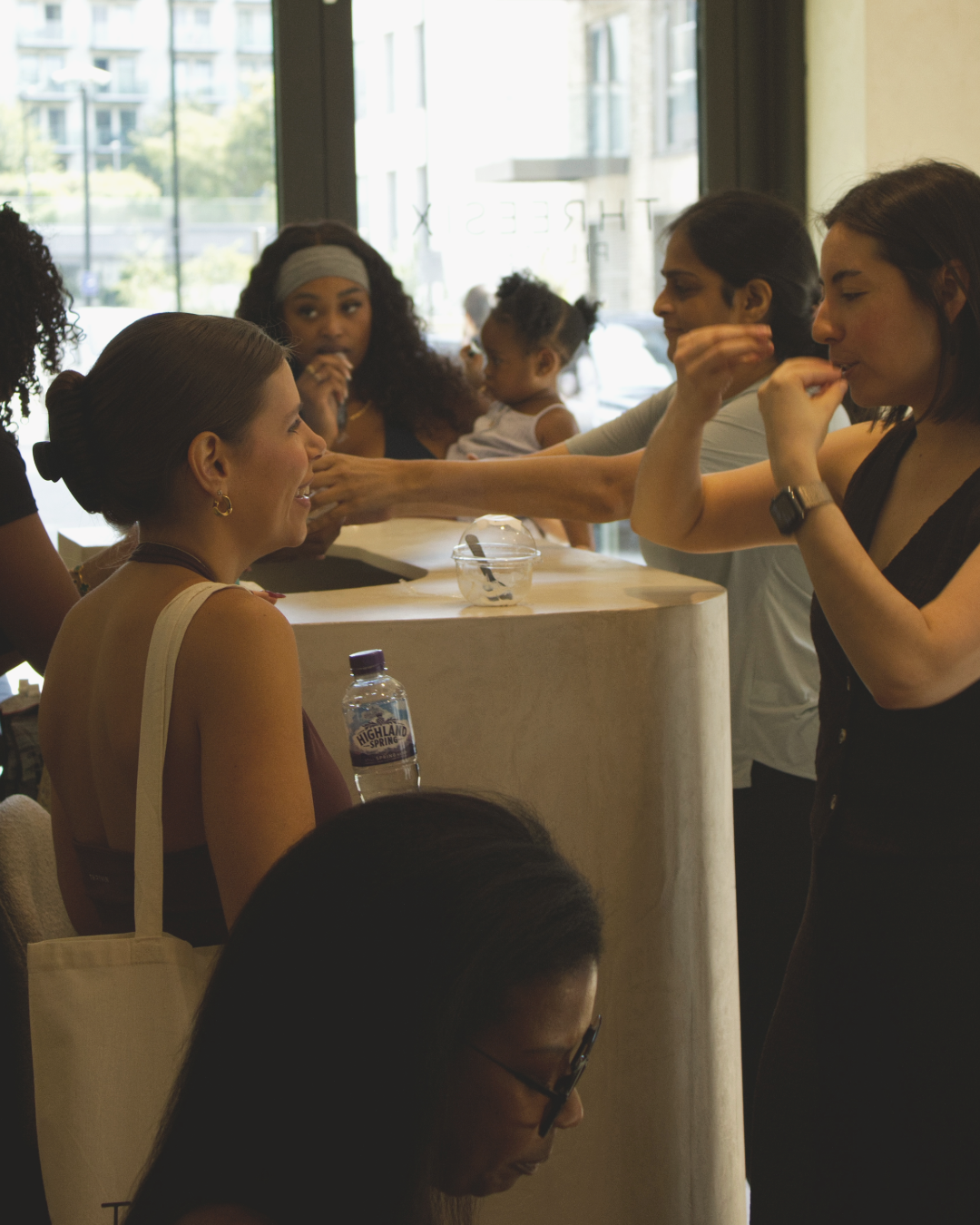
Attendees of the in-studio Fuel Your Sculpt nutrition masterclass, part of the 10-class monthly membership sold during the 26-day membership campaign sprint.
Pattern
Email, ad and organic content activity coinciding with sales can make a fragmented sales and marketing system look like it is working—until the studio tries to explain why a particular person bought and where they came from.
Before the campaign, the studio could see the individual outcomes produced by its different channels, giving the impression that the current system was working. Instagram showed attention and engagement. Momence recorded bookings and payments. Email delivered generic updates to existing contacts.
But each channel was working in isolation and the studio could not consistently trace someone’s journey from discovering an offer, to expressing interest, to attending classes, to considering a membership and eventually purchasing.
As a result of this disconnect, the customer who bought the offer remained as unknown to the studio as the customer who did not buy the offer. The then-present approach created no opportunity for a conversation to understand the prospect’s motives and intentions for their Pilates practice, to then prescribe the offer and certain classes based on that information.
And so even though more content was published, more generic messages were sent and more individuals entered the sales funnel, the fragmented customer journey and lack of information gathered retained some prospects but lost many along the way.
Practice
The aim of this membership campaign was not just to increase the volume of prospects through the studio’s fragmented sales and marketing system. Instead, it was to make each channel in the studio’s sales infrastructure work together and serve a particular function within the larger customer journey.
During the campaign, this manifested as:
Content attracting attention, creating awareness of the membership offer, demand for that offer and helping potential buyers recognise whether the membership was suited to them.
Broader outreach through email and Instagram DMs helping identify individuals interested in the membership offer and willing to engage in a conversation.
Automated messages triggered by keywords sent in DMs, replying to stories or written in comments, also helping to identity interest in the membership offer.
Personal follow-up revealing the individual goals, concerns and practical barriers behind that interest.
Class recommendations translating the membership from a general offer into a plan that could work within someone’s actual life.
Sales attribution recording which combination of interactions contributed to the eventual sale.
Through the different components of the marketing and sales system working together harmoniously together, the previous friction in the customer journey causing prospects to drop out before purchasing an offer, was removed.
Additionally, understanding of the prospect increased through the sales conversations becoming an opportunity to diagnose what the prospect still needed to understand before purchase, rather than just repeating the features of the offer.
Below are 3 of the most common objections which came up during the sales conversations and how they were overcome through prescribing the offer:
Objection: concern about whether the classes would be too difficult.
Offer prescription: suggesting instructors and sessions that would allow her to begin confidently.
Objection: uncertain about using all ten classes.
Offer prescription: understanding schedule and work commitments to identify the days and class times that could realistically form part of her week.
Objection: unsure which classes would help her make progress on particular strength, mobility or body-composition goals.
Offer prescription: suggesting particular classes and instructors best for her goal focus.
Creating a more integrated approach to sales and marketing facilitated a better understanding of the prospect, their needs and desires, which in turn made selling the membership easier.
Whereas previously, the prospect was asked to image how the 10 class membership might work for them, this new approach removed frictions and objections to purchasing the membership offer, through helping her to see how those 10 classes could realistically fit into her lifestyle and help make progress on her goals.
More membership sales were the result of prescribing the offer and the classes—not from increasing the volume of output.
Proof
During the campaign, I sent 218 generic, copy-and-paste text DMs.
Those messages generated 20 responses—an approximate response rate of 9%—and 4 completed membership purchases.
In addition to the generic DMs, I sent a sequence of 9 emails to current and previous customers.
Those emails were sent to 451 individuals and closed a further 4 membership purchases—an approximate close rate of 1%.
I also sent 13 personalised voice notes to selected prospects.
Those messages generated 7 responses—an approximate response rate of 54%—2 completed membership purchases and 3 expressions of immediate purchasing intent.
Even though the broad outreach produced four times as many completed purchases, it required almost 52 times as many outbound contacts to do so. Measured by completed purchases, the personalised voice notes converted at approximately 13 times the rate of the combined generic DM and email outreach: 15.4% compared with 1.2%.
This was not a controlled experiment. These 2 groups were not identical and the recipients of the voice notes had been selected because there was already a reason to believe a personal conversation would be relevant. I would therefore not use these figures to claim that sending voice notes automatically produces a higher conversion rate.
The more useful signal was that through identifying the right people for personal attention, understanding their individual circumstances and responding with greater specificity produced a much higher concentration of engagement and purchasing intent.
Broad outreach still performed an important function. It allowed me to reach more people, surface interest and generate 8 purchases that may not otherwise have happened.
But relevance determined what happened after someone responded.
The proof, therefore, is not that personal voice notes should replace broader outreach. The two approaches served different purposes within the customer journey.
Volume created the pool of opportunity. Relevance helped determine who required personal attention, what was preventing them from moving and which next step would make the membership feel right for them.
The stronger sales system needed both and stopped expecting both to perform the same job.
Before increasing the volume of prospects who encounter your studio through ads and organic content, ask: what are the steps in a prospects journey from becoming aware about the studio to buying an offer? Are they friction-less? Do they create an opportunity for a sales conversation with the prospect?
If you know your sales and marketing system needs improvement to close more qualified prospects, but are not sure where to start, email me at jessicasabry@eastxwestmedia.com to tell me a little bit about the system you are currently using. I’ll reply with the first place I would start.