
The Missing Link Between Visibility and Membership Sales
Content volume and the studio’s visibility appeared to be the studio’s main problem—the central reason why more potential clients weren’t discovering, and then buying, its offers. But both were symptoms of the problem, rather than the source.
Before beginning to work with me, the studio owners had fallen into the common trap of believing the misleading social media success equation: more followers + more engagement + more visibility = more people who want to buy their Pilates memberships.
But as painful as this may be to hear, more Pilates membership sales do not come from more followers, more engagement and more visibility alone.
Selling ten £180 Pilates memberships during the 26-day membership campaign showed that the commercial value of content is determined not only by how many people see it, but by who sees it, what it helps them understand and what it prompts them to do next.
More membership sales came from quality content created with a specific commercial intent: to attract more qualifiedvisibility, create demand for the membership, help potential clients understand how it could work for them and reveal which leads were ready for a personal conversation.
Quality, in this context, did not simply mean content that was more polished, more entertaining or more likely to go viral. It meant content designed to perform a clear function within the studio’s wider sales ecosystem.
In this Field Note, I break down how changing the function of the studio’s content helped increase sales of this membership to 7.3× its previous monthly average. As always, this is a field note from my personal experience working with one London reformer studio and is not a universal prescription for every reformer studio.
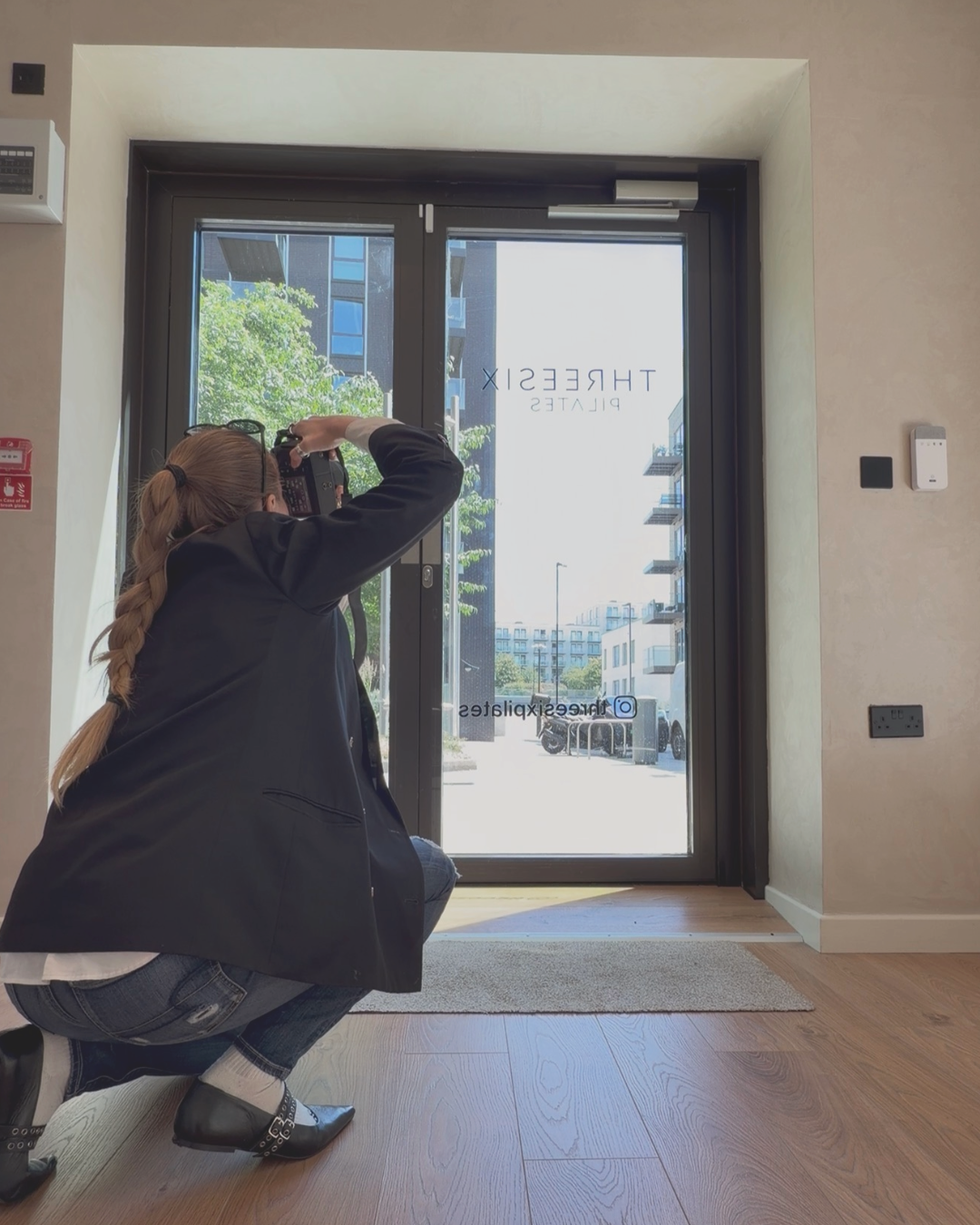
Author capturing content of the studio.
The Pattern
With a mostly inactive feed and irregular story cadence—averaging around one feed post a week and stories published on only 45% of days since the studio opened—increasing content volume needed to be part of the solution.
But the lack of consistent content was only part of the problem.
Another part of the solution appeared to be publishing more of the content that had historically generated the studio’s greatest visibility: influencer collaborations creating the dopamine rush of surface-level engagement.
One such post had generated 5,317 likes, 72 comments, 40 reposts, 544 shares and 116K views.
On the surface, these figures made it look like the studio needed to replicate more of this content. But the impressive metrics could not actually tell us whether the content had reached potential clients, created demand for the studio’s offers or moved anyone closer to purchase.
This showed that content generating more visibility is not the same as commercially effective content.
Visibility was only one function of content. Increasing membership sales also required potential clients to understand the problem the membership could help them solve, recognise its value, trust that it could work for them and feel ready to take the next step.
The campaign revealed another important distinction later in the buyer journey.
Even when qualified leads had engaged with the content, understood the offer and made it to the point of decision, the majority still needed a personal sales conversation before taking the final step and purchasing the membership.
The pattern was therefore twofold: high visibility did not necessarily indicate qualified demand and qualified interest did not automatically translate into a purchase.
The studio’s total number of followers and engagements was a poor measure of commercial value because not every follower—and not every interaction—carried equal buying intent. A post reaching 116K passive viewers could appear more successful than one prompting ten locally relevant potential clients to reply or ask a question, despite the second creating far more opportunity for a sale.
Content was contributing to the sales process, but it was not the entire sales system. Its most commercially valuable function was to attract, educate and warm the right people, reveal who was showing genuine intent and create the opening for personal follow-up.
In other words, content was the bridge between qualified visibility and the personal conversation that could convert it into a membership sale.
The Practice
Instead of beginning your content strategy by asking, “How can we reach more people?”, begin by asking, “What does this piece of content need to help the right person understand, feel or do next?”
Content contributes to membership sales when it guides a potential client through the full buyer journey: from being unaware of the membership, to recognising the problem it could help them solve, understanding how it helps solve that problem, trusting that it could work for them and finally seeing a clear and easy route to purchase.
Not every piece of content needs to carry someone through that entire journey. But every piece should have a clear function within that journey.
One piece may introduce the studio to more potential clients. Another may create desire for the transformation offered by the membership. Another may answer an objection, provide proof or invite someone to identify themselves as interested.
This also means measuring each piece according to the function it was created to perform. Content designed for visibility can be assessed by how many relevant local people it reaches. Content designed to reveal intent should be assessed by the replies, questions, profile visits, link taps or sales conversations it generates—not simply by its number of likes.
The same principle applies if you want influencers to form part of your strategy.
Learn from what established brands do: they carefully choose and vet influencers based on their alignment with the brand’s niche and target customer, rather than selecting them solely because they have a large audience.
For a Pilates studio, prioritise local influencers who already demonstrate a genuine interest in wellness generally and Pilates specifically—and whose audiences contain people who could realistically become clients of the studio.
A smaller creator with a highly relevant local audience may be far more commercially valuable than a larger influencer who generates thousands of views from people who will never purchase a class.
Solely choosing unaligned influencers with large followings, puts your studio at risk of attracting more visibility without attracting more potential buyers.
Finally, use content to make buying intent visible. Invite potential clients to reply to a story, answer a question, vote in a poll, send a keyword or ask for more information about the offer. Then treat that response as the beginning of a personal conversation, rather than expecting another piece of content to complete the sale alone.
The objective is not simply to create more content or accumulate more views. It is to build a connected pathway from qualified visibility, to understanding, to trust, to visible intent—and then to purchase.
The Proof
The most revealing findings come from comparing what increased during the campaign with what actually moved potential clients closer to purchase.
During the sprint, the studio’s feed posting frequency increased by approximately 6.5x. Its Instagram Stories moved from being published on around 45% of days to appearing on 26 consecutive days.
However, trying to publish as much content as possible produced no clear commercial result on its own.
The increase in volume created a consistent campaign presence, which was useful for increasing brand familiarity and trustworthiness. However, it was the specific function performed by that content which made it commercially useful.
Daily Story sequences repeatedly introduced the offer, showed the studio experience, shared social proof, humanised the studio and reminded potential clients of the deadline. Other sequences addressed the buying barriers appearing in customer conversations, such as whether 10 classes could fit around a busy schedule, whether the membership would produce noticeable results and whether particular classes would be suitable for their needs or goals.
This content did not complete the sale. It gave potential clients repeated opportunities to recognise themselves in the offer, consider how it could work for them and reveal the questions preventing them from moving forward.
Campaign and email content were seen to help generate interest in all cases. But it was found that interested prospects generally still needed a personal conversation before they purchased, with 70% of the final membership buyers needing a sales conversation before they bought.
In other words, the content played a more important role at the top of the funnel and the start of the conversion journey, than in the eventual purchase.
Campaign content attracted attention.
Objection-led sequences warmed that attention.
Replies, questions and engagement helped identify who was considering the offer.
Personal conversations then translated the general membership promise into a recommendation for that individual’s goals, confidence and schedule.
And so even though an Instagram Story could explain why a 10-class rhythm might support greater consistency, the follow-up conversation could explain which 10 classes this particular person should attend, which instructors suited what she wanted to achieve and how those classes could realistically fit around her working week.
Without the content, that conversation had less context and fewer natural openings through which to begin.
However, without the conversation, the interest created by the content often remained untapped.
The content’s commercial value was not simply that it reached more people—it was that it made the next meaningful sales conversation possible.
Before falling into the trap of increasing your content cadence or creating content just to increase views and engagement, ask: what role does each piece of content play in moving leads further along the customer journey to becoming clients? Does this content aim to a. attract attention b. nurture or warm that attention c. convince of the offer’s suitability or d. close the sale?
If your content calendar is full but you cannot clearly see how it connects to membership sales, email me at jessicasabry@eastxwestmedia.com to tell me about one piece of content you are planning. I’ll tell you the commercial role I would give it.