
Ten Classes Were Never the Real Offer
The 10-class monthly membership was not a new offer created for this campaign—it had been one of the boutique London reformer studio’s core offers since opening.
Before the campaign, the membership averaged approximately 1.19 sales per month. Yet during the 21-day campaign, I sold ten of these £180-per-month memberships. With a two-month minimum commitment, they generated £3,600 in minimum committed revenue.
I will let you in on a secret: the increase began with making the offer more desirable—and that began with changing the way it was framed.
Before the campaign, the offer was sold primarily through its ten-class allocation, supported by occasional messages describing it as ‘for those fully committed’ or a way ‘to build your strength’. During this pre-campaign phase, the membership was presented through a logical, feature-centric explanation of what someone would receive. What it lacked was a compelling reason to choose this particular membership from this particular studio.
Despite what Pilates studio owners may want to believe, very few potential clients wake up wanting to invest a significant amount in a membership simply because it includes a particular number of classes. They want to invest because of what consistently attending those classes could help them feel, achieve or become.
That shift—from selling the membership’s features to selling the aspirational identity it could help buyers move towards—formed the foundation of a campaign that sold 12x its historic monthly average.”
Below, I break down how I increased the offer’s desirability by selling an aspirational identity during a 21-day membership campaign for a London reformer studio. As always, this is a field note from my personal experience working with a reformer studio—not a universal prescription for every reformer studio.
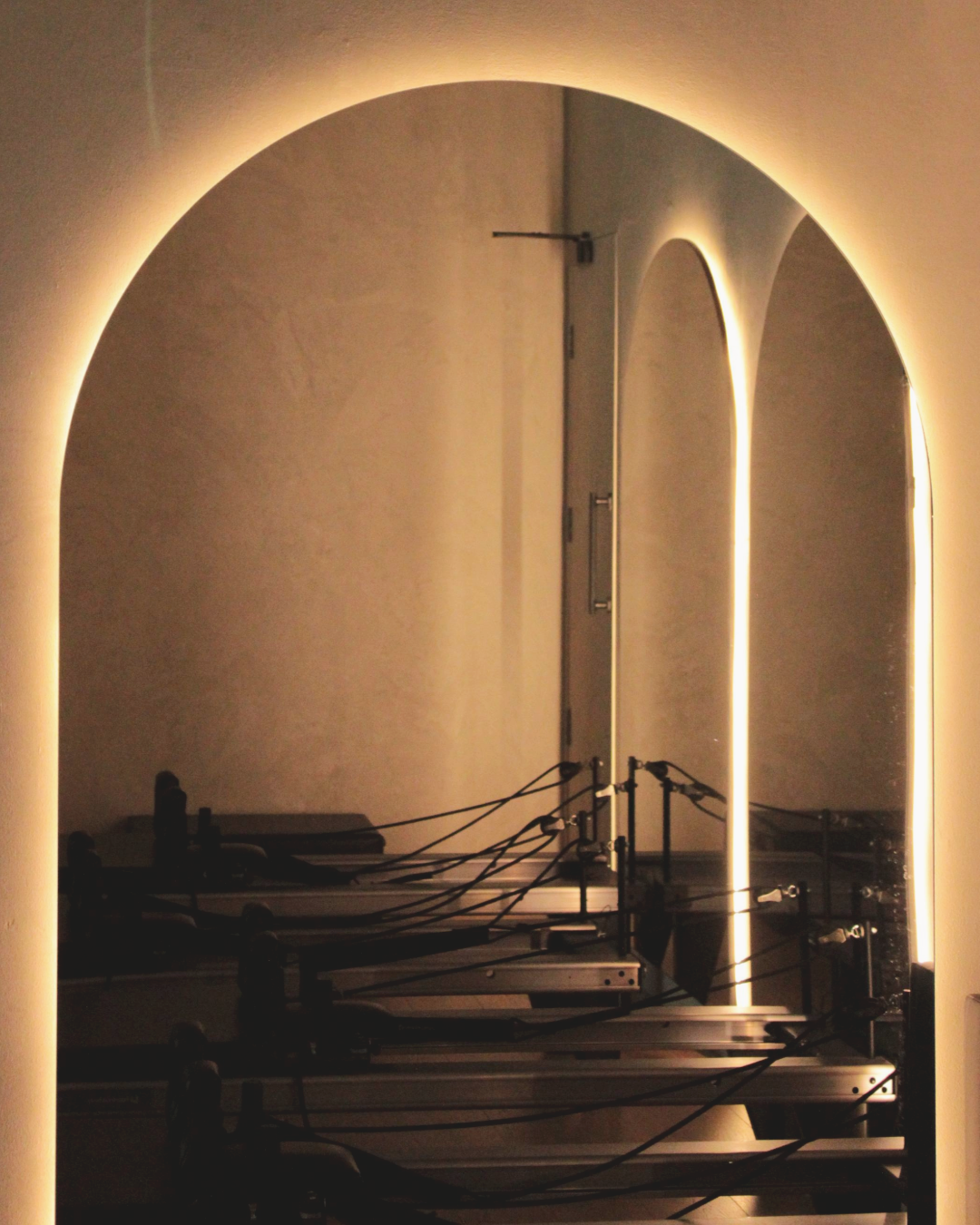
Current studio’s luxurious interior
The Pattern
As I noted in Field Note 001, this Pilates studio’s interior whispered luxury from the moment you walked through the door. Its signature scent and soothing, minimalistic decor created the feeling of being wrapped in a soft blanket of calm.
Yet despite the studio’s dreamy interiors and visibility from influencer and brand collaborations, the membership remained an underperforming offer—until the campaign repositioned it around the transformation.
This may sound simple, but before trying to sell the membership, I first asked why people choose Pilates at all. I grouped those motivations into two broad categories:
to improve how they feel or function, physically or mentally.
to improve how they see themselves or how they believe others see them.
In practice, those motivations can look like this:
How they want to feel & function
DESIRED PHYSICAL CHANGE > DESIRED MENTAL OR EMOTIONAL CHANGE
Support their body-composition goals > Feel more confident and comfortable in their body
Build strength and muscle tone > Feel strong, capable and empowered
Improve flexibility, mobility and stability > Move with greater ease and feel less restricted
Return to movement after an injury, where appropriate > Rebuild trust in their body and confidence in moving
Rebuild strength after illness, where appropriate > Regain energy, enjoyment and confidence in what their body can do
Support recovery and better-quality sleep > Feel more rested, balanced and resilient
Support stress management > Feel calmer and less overwhelmed
Maintain mobility and physical capacity over time > Feel energised and supported rather than depleted
Establish a consistent movement routine > Feel disciplined, grounded and proud of keeping a promise to themselves
How they want to see themselves—and be seen
DESIRED CHANGE IN SELF-PERCEPTION > DESIRED CHANGE IN HOW OTHERS PERCEIVE THEM
Feel confident and comfortable in their body > Appear active, confident and self-assured
Feel attractive and at ease in their appearance > Carry themselves with greater confidence
See themselves as strong and capable > Be seen as strong, disciplined and able
Enjoy movement rather than using exercise to punish their body > Be seen as someone who genuinely enjoys and prioritises movement
Feel more body-aware and connected to themselves > Appear comfortable and assured in how they move
See themselves as someone who follows through > Be perceived as consistent, focused and disciplined
Feel more balanced, grounded and in control > Appear calm, composed and fulfilled
Feel able to make time for and invest in themselves > Be associated with a lifestyle that prioritises wellbeing
Identify with their aspirational “Pilates girl” or “Pilates princess” self > Be associated with an aspirational wellness or “it girl” lifestyle
But understanding those motivations, however, was only the first phase. Insight alone was not enough to sell the membership.
The second phase drew on a principle shared by effective storytelling, media campaigns and propaganda: crafting and repeating a coherent narrative that connects an offer to a desired identity.
The Practice
The word “propaganda” rightly makes people uncomfortable. Here, I am referring to the ethical use of narrative, repetition and identity—not manipulating someone into making a purchase they do not want.
Having previously worked in narrative analysis, I am particularly conscious of the line between clarifying genuine value and manufacturing desire. In this campaign, I used persuasive storytelling principles to make the membership more relevant to people already considering an investment in Pilates.
I did this through a two-pronged approach, by highlighting the transformation the membership was designed to support and then adding exclusive features that helped facilitate it.
First, I established that this membership as a structured way to begin experiencing the physical benefits of a consistent Pilates practice, including seeing and feeling improvements in strength, muscle tone, flexibility and stability. I also showed how the membership structure could help build consistency, whilst regular practice could support greater confidence, balance, relaxation and mind–body connection.
I then selected exclusive, limited-time bonuses designed to support, nourish and motivate members’ practice, increasing the offer’s appeal and perceived value.
The key takeaway is to define the value customers receive in return for investing in your studio—beyond the basic features of the offer.
The Proof
If you have read the first field note, you already know the gist of the story. Now to make things spicier, let us zoom in on what changed when the campaign sold a transformation rather than a specific number of classes.
Across the 19 feed posts, daily Stories, 4 ads, 9 emails, 218 DMs, 13 voice notes, 4 in-person conversations and subsequent follow-ups, ran the underlying narrative of the transformation this membership was designed to support.
The campaign did more than increase sales of the 10-class membership—its clearest wider commercial impact was a shift towards higher-value recurring relationships. Crucially, this shift did not come from increased Intro Offer acquisition. Intro Offer purchases declined by about a third, yet the latest available payment report—captured before the end of the membership campaign—recorded 14 customers making their first observed recurring-membership purchase, compared with only 5 during the preceding equivalent period. During the campaign period, subscription payments increased by +27% and subscription revenue increased by +41%.
The one-to-one sales conversations revealed what was influencing customers’ purchase decisions. What dominated these conversations was not a desire for ten classes or a list of exclusive benefits—instead, customers spoke about returning to exercise, becoming stronger or more toned, and building a Pilates routine they could realistically sustain.
The recorded reasons for purchasing were that the classes had been matched to each person’s goals and schedule, that customers felt heard and valued, and that they could clearly see how the membership would move them towards their desired result.
The same pattern appeared in the outreach. 13 personalised voice notes generated 7 responses—approximately 54%—including 3 people expressing immediate booking intent and 2 confirmed bookings by the time of the debrief. By comparison, 218 broader text DMs generated only 20 responses—approximately 9%.
Although this was not a controlled experiment, it revealed a clear pattern within the campaign:
Personal relevance moved people towards purchase more effectively than generic messaging or broad outreach alone.
The membership did not become cheaper, it became easier for the right customer to understand what it could help them achieve—and who it could help them become. The content created the context, the repetition developed recognition, the personalisation made the promise relevant and the conversation helped close the sale.
The transformation is the North Star of your membership campaign. The exclusive features are the stepping stones that support that transformation. The communication system creates awareness of the offer, nurtures interest and ultimately helps convert that interest into action.
Before starting your own membership campaign, ask: does this membership make a specific promise about the outcome it helps members achieve—or is it simply a stack of features without a compelling reason to buy?
If your membership is more a stack of features than a story someone could buy into, email me at jessicasabry@eastxwestmedia.com to tell me about the membership you want to sell. I’ll reply with the first place I would start.